Why Jesus is God, and he is the only GOD.
Can you explain the Trinity?
The following clearly and briefly explains the Trinity...three gods or one?
 You and I live in a three-dimensional world. All physical objects have a certain height, width, and depth. One person can look like someone else, or behave like someone else, or even sound like someone else. But a person cannot actually be the same as another person. They are distinct individuals.
God, however, lives without the limitations of a three-dimensional universe. He is spirit. And he is infinitely more complex than we are.
That is why Jesus the Son can be different from the Father. And, yet the same.
The Bible clearly speaks of: God the Son, God the Father, and God the Holy Spirit. But emphasizes that there is only ONE God.
If we were to use math, it would not be, 1+1+1=3. It would be 1x1x1=1. God is a triune God.
Thus the term: "Tri" meaning three, and "Unity" meaning one, Tri+Unity = Trinity. It is a way of acknowledging what the Bible reveals to us about God, that God is yet three "Persons" who have the same essence of deity.
Some have tried to give human illustrations for the Trinity, such as H2O being water, ice and steam (all different forms, but all are H2O). Another illustration would be the sun. From it we receive light, heat and radiation. Three distinct aspects, but only one sun.
No illustration is going to be perfect.
But from the very beginning we see God as a Trinity. In the book of Genesis, the first book in the Bible, God says, "Let us make man in our image…male and female he created them."1 You see here a mixture of plural and singular pronouns.
When Moses asked God for his name, God replied, "I am" - eternally existing.
Jesus used the same phrase numerous times.
"I am the light of the world..."
"I am the bread of life..."
"I am the way, the truth and the life. No one comes to the Father except through me."
"I am the light of the world..."
"I am the bread of life..."
"I am the way, the truth and the life. No one comes to the Father except through me."
Abraham is someone mentioned in Genesis, thousands of years before Jesus came to earth. Yet, Jesus said of himself, "Before Abraham was born, I am." The Jews understood fully what Jesus was saying because they picked up stones to kill him for "blasphemy" - claiming to be God.2 Jesus has always existed.
This came up time and time again. Jesus was so clear about his unique relationship with the Father. This is why, “the Jewish leaders tried all the harder to find a way to kill him. For he not only broke the Sabbath, he called God his Father, thereby making himself equal with God.”3
For all of eternity, the Father, Son and Holy Spirit have always been in relationship and communication with each other, yet not as three gods…as one God.
This answers the question:
If Jesus is God, who was he praying to?
On earth, Jesus continued to talk to the Father, and the Father and Spirit continued to communicate with him.
Though not a complete list, here is some other Scripture that shows God is one, in Trinity:
- "Hear, O Israel! The LORD is our God, the LORD is one!"4
- "I am the LORD, and there is no other; Besides Me there is no God."5
- There is no God but one.6
- And after being baptized, Jesus went up immediately from the water; and behold, the heavens were opened, and he saw the Spirit of God descending as a dove, and coming upon Him, and behold, a voice out of the heavens, saying, "This is My beloved Son, in whom I am well-pleased."7
- "Go therefore and make disciples of all the nations, baptizing them in the name of the Father and the Son and the Holy Spirit."8
- Jesus said: "I and the Father are one."9
- "He who has seen Me has seen the Father."10
- "He who beholds Me beholds the One who sent Me."11
- If anyone does not have the Spirit of Christ, he does not belong to Him.12
- "Joseph, son of David, do not be afraid to take Mary as your wife; for that which has been conceived in her is of the Holy Spirit."13
- And the angel answered and said to her [Mary], "The Holy Spirit will come upon you, and the power of the Most High will overshadow you; and for that reason the holy offspring shall be called the Son of God."14
- [Jesus speaking to His disciples] "And I will ask the Father, and He will give you another Helper, that He may be with you forever; the Spirit of truth, whom the world cannot receive, because it does not behold Him or know Him, but you know Him because He abides with you, and will be in you." ... "If anyone loves Me, he will keep My word; and My Father will love him, and We will come to him, and make Our abode with him."15
It is impossible for us to know conclusively whether God exists and what he is like unless he takes the initiative and reveals himself.
We must scan the horizon of history to see if there is any clue to God's revelation. There is one clear clue. In an obscure village in Palestine, 2,000 years ago, a Child was born in a stable. Today the entire world is still celebrating the birth of Jesus, and for good reason.
Did Jesus ever claim to be God?
We're told that "the common people heard him gladly." And, "He taught as One who had authority, and not as their teachers of the Law."1
 It soon became apparent, however, that he was making shocking and startling statements about himself. He began to identify himself as far more than a remarkable teacher or prophet. He began to say clearly that he was God. He made his identity the focal point of his teaching. The all-important question he put to those who followed him was, "Who do you say I am?" When Peter answered and said, "You are the Christ, the Son of the living God,"2 Jesus was not shocked, nor did he rebuke Peter. On the contrary, he commended him!
Jesus frequently referred to "My Father," and his hearers got the full impact of his words. We are told, "The Jews tried all the harder to kill him; not only was he breaking the Sabbath, but he was even calling God his own Father, making himself equal with God."3
On another occasion he said, "I and My Father are One." Immediately the religious authorities wanted to stone him. He asked them which of his good works caused them to want to kill him. They replied, "We are not stoning you for any of these but for blasphemy, because you, a mere man, claim to be God."4
Look at His life.
As Jesus was healing a paralyzed man, Jesus said to him, "Son, your sins are forgiven you." The religious leaders immediately reacted. "Why does this fellow talk like that? He's blaspheming! Who can forgive sins but God alone?"
When Jesus was on trial for his life, the high priest put the question to him directly: "Are you the Christ, the Son of the Blessed One?"
"I am," said Jesus. "And you will see the Son of Man sitting at the right hand of the Mighty One and coming on the clouds of heaven."
The high priest rendered the verdict. "Why do we need any more witnesses?" he asked. "You have heard his blasphemy."5
So close was Jesus' connection with God that he equated a person's attitude to himself with the person's attitude toward God. Thus, to know him was to know God.6 To see him was to see God.7 To believe in him was to believe in God.8 To receive him was to receive God.9 To hate him was to hate God.10 And to honor him was to honor God.11
Possible explanations
“As we face the claims of Christ, there are only four possibilities. He was either a liar, mentally ill, a legend, or the Truth.”
The question is, was he telling the truth?
Maybe Jesus lied when he said he was God. Perhaps he knew he was not God, but deliberately deceived his hearers. But there is a problem with this reasoning. Even those who deny his deity affirm that he was a great moral teacher. Jesus could hardly be a great moral teacher if, on the most crucial point of his teaching -- his identity -- he was a deliberate liar.
Another possibility is that Jesus was sincere but self-deceived. We have a name for a person today who thinks he is God. Mentally disabled. But as we look at the life of Christ, we see no evidence of the abnormality and imbalance we find in a mentally ill person. Rather, we find the greatest composure under pressure.
A third alternative is that his enthusiastic followers put words into his mouth he would have been shocked to hear. Were he to return, he would immediately repudiate them.
No, modern archeology verifies that four biographies of Christ were written within the lifetime of people who saw, heard and followed Jesus. These gospel accounts contained specific facts and descriptions confirmed by those who were eyewitnesses of Jesus. The early writing of the Gospels by Matthew, Mark, Luke and John, is why they gained such circulation and impact, unlike the fictional Gnostic gospels which appeared centuries later.
Jesus was not a liar, or mentally disabled, or manufactured apart from historical reality. The only other alternative is that Jesus was being consciously truthful when he said he was God.
What is the proof?
From one point of view, however, claims don't mean much. Talk is cheap. Anyone can make claims. There have been others who have claimed to be God. I could claim to be God, and you could claim to be God, but the question all of us must answer is, "What credentials do we bring to substantiate our claim?" In my case it wouldn't take you five minutes to disprove my claim. It probably wouldn't take too much more to dispose of yours.
But when it comes to Jesus of Nazareth, it's not so simple. He had the credentials to back up his claim. He said, "Even though you do not believe me, believe the evidence of the miracles, that you may learn and understand that the Father is in Me, and I am in the Father."12
The life of Jesus - His unique moral character
 His moral character coincided with his claims. The quality of his life was such that he was able to challenge his very enemies with the question, "Can any of you prove me guilty of sin?"13 He was met by silence, even though he addressed those who would have liked to point out a flaw in his character.
We read of Jesus being tempted by Satan, but we never hear of a confession of sin on his part. He never asked for forgiveness, though he told his followers to do so.
This lack of any sense of moral failure on Jesus' part is astonishing in view of the fact that it is completely contrary to the experience of the saints and mystics throughout the ages. The closer men and women draw to God, the more overwhelmed they are with their own failure, corruption, and shortcomings. The closer one is to a shining light, the more he realizes his need of a bath. This is true also, in the moral realm, for ordinary mortals.
It is also striking that John, Paul, and Peter, all of whom were trained from earliest childhood to believe in the universality of sin, all spoke of the sinlessness of Christ: "He committed no sin, and no deceit was found in his mouth."14
Even Pilate, who sentenced Jesus to death, asked, "What evil has he done?" After listening to the crowd, Pilate concluded, "I am innocent of this man's blood; see to it yourselves." The crowd relentlessly demanded Jesus be crucified (for blasphemy, claiming to be God). The Roman centurion who assisted in the crucifixion of Christ said, "Surely he was the Son of God."15
He cured the sick
Jesus constantly demonstrated his power and compassion. He made the lame to walk, the blind to see, and healed those with diseases. For example, a man who had been blind from birth. Everyone knew him as the familiar beggar who sat outside the temple. Yet Jesus healed him. As the authorities questioned the beggar about Jesus, he said, "One thing I do know. I was blind but now I see!" he declared. He was astounded that these religious authorities didn't recognize this Healer as the Son of God. "Nobody has ever heard of opening the eyes of a man born blind," he said.16 To him the evidence was obvious.
His ability to control nature
Jesus also demonstrated a supernatural power over nature itself. He commanded a raging storm of high wind and waves on the Sea of Galilee to be calm. Those in the boat were awestruck, asking, "Who is this? Even the wind and waves obey him!"17 He turned water into wine, at a wedding. He fed a massive crowd of 5,000 people, starting with five loaves of bread and two fish. He gave a grieving widow back her only son by raising him from the dead.
Lazarus, a friend of Jesus' died and was buried in a tomb for four days already. Yet Jesus said, "Lazarus, come forth!" and dramatically raised him from the dead, witnessed by many. It is most significant that his enemies did not deny this miracle. Rather, they decided to kill him. "If we let him go on like this," they said, "everyone will believe in him."18
Is Jesus God, as he claimed?
 Jesus' supreme evidence of deity was his own resurrection from the dead. Five times in the course of his life, Jesus clearly predicted in what specific way he would be killed and affirmed that three days later he would rise from the dead.
Surely this was the great test. It was a claim that was easy to verify. It would either happen or not. It would either confirm his stated identity or destroy it. And significant for you and me, Jesus' rising from the dead would verify or make laughable statements such as these:
"I am the way, the truth, and the life; no one comes to the Father except through me."19 "I am the light of the world. He who follows me will not live in darkness, but will have the light of life."20 For those who believe in him, "I give them eternal life..."21
So by his own words, he offers this proof, ""The Son of Man is going to be delivered into the hands of men, and they will kill him. And when he is killed, after three days he will rise."22
What this would mean
“Talk is cheap. Anyone can make claims. But when it comes to Jesus of Nazareth... He had the credentials to back up His claim.”
If Christ rose, we know with certainty that God exists, what God is like, and how we may know him in personal experience. The universe takes on meaning and purpose, and it is possible to experience the living God in this life.
On the other hand, if Christ did not rise from the dead, Christianity has no objective validity or reality. The martyrs who went singing to the lions, and contemporary missionaries who have given their lives while taking this message to others, have been poor deluded fools.
Paul, the great apostle, wrote, "If Christ has not been raised, our preaching is useless and so is your faith."23 Paul rested his whole case on the bodily resurrection of Christ.
Did Jesus prove he is God?
Let's look at the evidence for Jesus' resurrection.
Given all the miracles he had performed, Jesus easily could have avoided the cross, but he chose not to.
Before his arrest, Jesus said, "I lay down my life that I may take it up again. No one takes it from me, but I lay it down of my own accord...and I have authority to take it up again."24
During his arrest, Jesus' friend Peter tried to defend him. But Jesus said to Peter, "Put your sword back into its place...Do you think that I cannot appeal to my Father, and he will at once send me more than twelve legions of angels?"25 He had that kind of power in heaven and on earth. Jesus went willingly to his death.
Jesus' crucifixion and burial.
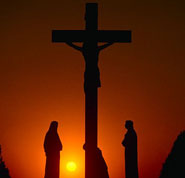
Jesus' death was by public execution on a cross, a common form of torture and death, used by the Roman government for many centuries. The accusation against Jesus was for blasphemy (for claiming to be God). Jesus said it was to pay for our sin.
Jesus was lashed with a multi-cord whip having metal or bone fragmented ends. A mock crown of long thorns was beaten into his skull. They forced him to walk to an execution hill outside of Jerusalem. They put him on a wooden cross, nailing his wrists and feet to it. He hung there, eventually dying. A sword was thrust into his side to confirm his death.
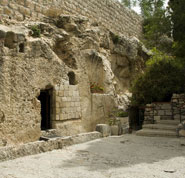
The body of Jesus was taken from the cross, wrapped in mummy-like linens covered with gummy-wet spices. His body was placed in a solid rock tomb, where a very large boulder was rolled down to it, to secure the entrance.
Everyone knew that Jesus said he would rise from the dead in three days. So they stationed a guard of trained Roman soldiers at the tomb. They also affixed an official Roman seal to the outside of the tomb declaring it government property.
Three days later, the tomb was empty.
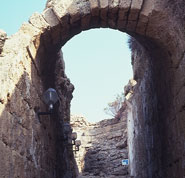 In spite of all this, three days later the boulder, formerly sealing the tomb, was found up a slope, some distance away from the tomb. The body was gone. Only the grave linens were found in the tomb, caved in, empty of the body.
It is important to note that both critics and followers of Jesus agree that the tomb was empty and the body missing.
The earliest explanation circulated was that the disciples stole the body while the guards were sleeping. This makes little sense. This was an entire guard of highly trained Roman soldiers, and falling asleep on duty was punishable by death.
Further, each of the disciples (individually and separately from each other) were tortured and martyred for proclaiming that Jesus was alive, risen from the dead. Men and women will die for what they believe to be true, though it may actually be false. They do not, however, die for what they know is a lie. If ever a man tells the truth, it is on his deathbed.
Maybe the authorities moved the body? Yet they crucified Jesus to stop people from believing in him. This also is a weak possibility. If they had Christ's body, they could have paraded it through the streets of Jerusalem. In one fell swoop they would have successfully smothered Christianity in its cradle. That they did not do this bears eloquent testimony to the fact that they did not have the body.
Another theory is that the women, distraught and overcome by grief, missed their way in the dimness of the morning and went to the wrong tomb. In their distress they imagined Christ had risen because the tomb was empty. But again, if the women went to the wrong tomb, why did the high priests and other enemies of the faith not go to the right tomb and produce the body?
“Men and women will die for what they believe to be true, though it may actually be false. They do not, however, die for what they know is a lie.”
One other possibility is what some call "the swoon theory." In this view, Christ did not actually die. He was mistakenly reported to be dead, but had swooned from exhaustion, pain, and loss of blood, and in the coolness of the tomb, he revived. (One would have to overlook the fact that they put a spear in his side to medically confirm his death.)
But let us assume for a moment that Christ was buried alive and swooned. Is it possible to believe that he would have survived three days in a damp tomb without food or water or attention of any kind? Would he have had the strength to extricate himself from the grave clothes, push the heavy stone away from the mouth of the grave, overcome the Roman guards, and walk miles on feet that had been pierced with spikes? It too makes little sense.
However, it wasn't the empty tomb that convinced Jesus' followers of his deity.
Not just the empty tomb.
That alone did not convince them that Jesus actually rose from the dead, was alive, and was God. What convinced them were the number of times that Jesus showed up, in person, in the flesh, and ate with them, and talked with them.
Luke, one of the gospel writers, says of Jesus, "he presented himself to them and gave many convincing proofs that he was alive. He appeared to them over a period of forty days and spoke about the kingdom of God."26
Is Jesus God?
All four of the gospel writers give accounts of Jesus physically showing up after his burial, obviously alive. One time that Jesus joined the disciples, Thomas, was not there. When they told him about it, Thomas simply wouldn't believe it. He flatly stated, "Unless I see the nail marks in his hands and put my finger where the nails were, and put my hand into his side, I will not believe it."
One week later, Jesus came to them again, with Thomas now present. Jesus said to Thomas, "Put your finger here; see my hands. Reach out your hand and put it into my side. Stop doubting and believe." Thomas replied, "My Lord and my God!"
Jesus told him "Because you have seen me, you have believed; blessed are those who have not seen and yet have believed."27
All these are based on the Holy Bible, so lets see if we can trust it.
History of the Bible - Who wrote the Bible?
The Bible was written over a span of 1500 years, by 40 writers. Unlike other religious writings, the Bible reads as a factual news account of real events, places, people, and dialogue. Historians and archaeologists have repeatedly confirmed its authenticity.
Using the writers' own writing styles and personalities, God shows us who he is and what it's like to know him.
There is one central message consistently carried by all 40 writers of the Bible: God, who created us all, desires a relationship with us. He calls us to know him and trust him.
The Bible not only inspires us, it explains life and God to us. It does not answer all the questions we might have, but enough of them. It shows us how to live with purpose and compassion. How to relate to others. It encourages us to rely on God for strength, direction, and enjoy his love for us. The Bible also tells us how we can have eternal life.
Multiple categories of evidence support the historical accuracy of the Bible as well as its claim to divine authorship. Here are a few reasons you can trust the Bible.
Archaeology confirms the Bible’s historical accuracy.
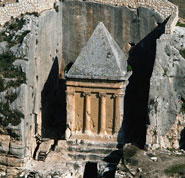 Archaeologists have consistently discovered the names of government officials, kings, cities, and festivals mentioned in the Bible -- sometimes when historians didn't think such people or places existed. For example, the Gospel of John tells of Jesus healing a cripple next to the Pool of Bethesda. The text even describes the five porticoes (walkways) leading to the pool. Scholars didn't think the pool existed, until archaeologists found it forty feet below ground, complete with the five porticoes.1
The Bible has a tremendous amount of historical detail, so not everything mentioned in it has yet been found through archaeology. However, not one archaeological find has conflicted with what the Bible records.2
In contrast, news reporter Lee Strobel comments about the Book of Mormon: "Archaeology has repeatedly failed to substantiate its claims about events that supposedly occurred long ago in the Americas. I remember writing to the Smithsonian Institute to inquire about whether there was any evidence supporting the claims of Mormonism, only to be told in unequivocal terms that its archaeologists see 'no direct connection between the archaeology of the New World and the subject matter of the book.'" Archaeologists have never located cities, persons, names, or places mentioned in the Book of Mormon.3
Many of the ancient locations mentioned by Luke, in the Book of Acts in the New Testament, have been identified through archaeology. "In all, Luke names thirty-two countries, fifty-four cities and nine islands without an error."4
Archaeology has also refuted many ill-founded theories about the Bible. For example, a theory still taught in some colleges today asserts that Moses could not have written the Pentateuch (the first five books of the Bible), because writing had not been invented in his day. Then archaeologists discovered the Black Stele. "It had wedge-shaped characters on it and contained the detailed laws of Hammurabi. Was it post-Moses? No! It was pre-Mosaic; not only that, but it was pre-Abraham (2,000 B.C.). It preceded Moses' writings by at least three centuries."5
Archaeology consistently confirms the historical accuracy of the Bible.
The Bible today is the same as what was originally written.
 Some people have the idea that the Bible has been translated "so many times" that it has become corrupted through stages of translating. That would probably be true if the translations were being made from other translations. But translations are actually made directly from original Greek, Hebrew and Aramaic source texts based on thousands of ancient manuscripts.
The accuracy of today’s Old Testament was confirmed in 1947 when archaeologists found “The Dead Sea Scrolls” along today's West Bank in Israel. "The Dead Sea Scrolls" contained Old Testament scripture dating 1,000 years older than any manuscripts we had. When comparing the manuscripts at hand with these, from 1,000 years earlier, we find agreement 99.5% of the time. And the .5% differences are minor spelling variances and sentence structure that doesn't change the meaning of the sentence.
Regarding the New Testament, it is humanity's most reliable ancient document.
All ancient manuscripts were written on papyrus, which didn’t have much of a shelf life. So people hand copied originals, to maintain the message and circulate it to others.
Few people doubt Plato’s writing of “The Republic.” It’s a classic, written by Plato around 380 B.C. The earliest copies we have of it are dated 900 A.D., which is a 1,300 year time lag from when he wrote it. There are only seven copies in existence.
Caesar’s “Gallic Wars” were written around 100-44 B.C. The copies we have today are dated 1,000 years after he wrote it. We have ten copies.
When it comes to the New Testament, written between 50-100 A.D, there are more than 5,000 copies. All are within 50-225 years of their original writing. Further, when it came to Scripture, scribes (monks) were meticulous in their copying of original manuscripts. They checked and rechecked their work, to make sure it perfectly matched. What the New Testament writers originally wrote is preserved better than any other ancient manuscript. We can be more certain of what we read about Jesus’ life and words, than we are certain of the writings of Caesar, Plato, Artistotle and Homer.
More reasons to trust the gospel accounts of Jesus.
 Four of the writers of the New Testament each wrote their own biography on the life of Jesus. These are called the four gospels, the first four books of the New Testament. When historians try to determine if a biography is reliable, they ask, "How many other sources report the same details about this person?"
Here's how this works. Imagine you are collecting biographies of President John F. Kennedy. You find many biographies describing his family, his presidency, his goal of putting a man on the moon, and his handling of the Cuban Missile Crisis. Regarding Jesus, do we find multiple biographies reporting similar facts about his life? Yes. Here is a sampling of facts about Jesus, and where you would find that fact reported in each of their biographies.
| Matthew | Mark | Luke | John | |
| Jesus was born of a virgin | 1:18-25 | - | 1:27, 34 | - |
| He was born in Bethlehem | 2:1 | - | 2:4 | - |
| He lived in Nazareth | 2:23 | 1:9, 24 | 2:51, 4:16 | 1:45, 46 |
| Jesus was baptized by John the Baptist | 3:1-15 | 1:4-9 | 3:1-22 | - |
| He performed miracles of healing | 4:24, etc. | 1:34, etc. | 4:40, etc. | 9:7 |
| He walked on water | 14:25 | 6:48 | - | 6:19 |
| He fed five thousand people with five loaves and two fish | 14:7 | 6:38 | 9:13 | 6:9 |
| Jesus taught the common people | 5:1 | 4:25, 7:28 | 9:11 | 18:20 |
| He spent time with social outcasts | 9:10, 21:31 | 2:15, 16 | 5:29, 7:29 | 8:3 |
| He argued with the religious elite | 15:7 | 7:6 | 12:56 | 8:1-58 |
| The religious elite plotted to kill him | 12:14 | 3:6 | 19:47 | 11:45-57 |
| They handed Jesus over to the Romans | 27:1, 2 | 15:1 | 23:1 | 18:28 |
| Jesus was flogged | 27:26 | 15:15 | - | 19:1 |
| He was crucified | 27:26-50 | 15:22-37 | 23:33-46 | 19:16-30 |
| He was buried in a tomb | 27:57-61 | 15:43-47 | 23:50-55 | 19:38-42 |
| Jesus rose from the dead and appeared to his followers | 28:1-20 | 16:1-20 | 24:1-53 | 20:1-31 |
Two of the gospel biographies were written by the apostles Matthew and John, men who knew Jesus personally and traveled with him for over three years. The other two books were written by Mark and Luke, close associates of the apostles. These writers had direct access to the facts they were recording. At the time of their writing, there were still people alive who had heard Jesus speak, watched him heal people and perform miracles.
So the early church readily accepted the four gospels because they agreed with what was already common knowledge about Jesus' life.
Each of the gospels of Matthew, Mark, Luke and John, read like news reports, a factual accounting of the days events, each from their own perspective. The descriptions are unique to each writer, but the facts are in agreement.
Here’s why the gospels were written.
 In the early years after Jesus' death and resurrection there was no apparent need for written biographies about Jesus.Those living in the Jerusalem region were witnesses of Jesus and well aware of his ministry.6
However, when news of Jesus spread beyond Jerusalem, and the eyewitnesses were no longer readily accessible, there was a need for written accounts to educate others about Jesus' life and ministry.
If you would like to know more about Jesus, this article will give you a good summary of his life: Beyond Blind Faith.
How the books of the New Testament were determined.
 The early church accepted the New Testament books almost as soon as they were written. It’s already been mentioned that the writers were friends of Jesus or his immediate followers, men to whom Jesus had entrusted the leadership of the early church. The Gospel writers Matthew and John were some of Jesus' closest followers. Mark and Luke were companions of the apostles, having access to the apostles' account of Jesus' life.
The other New Testament writers had immediate access to Jesus as well: James and Jude were half-brothers of Jesus who initially did not believe in him. Peter was one of the 12 apostles. Paul started out as a violent opponent of Christianity and a member of the religious ruling class, but he became an ardent follower of Jesus, convinced that Jesus rose from the dead.
The reports in the New Testament books lined up with what thousands of eyewitnesses had seen for themselves.
When other books were written hundreds of years later, it wasn't difficult for the church to spot them as forgeries. For example, the Gospel of Judas was written by the Gnostic sect, around 130-170 A.D., long after Judas' death. The Gospel of Thomas, written around 140 A.D., is another example of a counterfeit writing erroneously bearing an apostles' name. These and other Gnostic gospels conflicted with the known teachings of Jesus and the Old Testament, and often contained numerous historical and geographical errors.7
In A.D. 367, Athanasius formally listed the 27 New Testament books (the same list that we have today). Soon after, Jerome and Augustine circulated this same list. These lists, however, were not necessary for the majority of Christians. By and large the whole church had recognized and used the same list of books since the first century after Christ.
As the church grew beyond the Greek-speaking lands and needed to translate the Scriptures, and as splinter sects continued to pop up with their own competing holy books, it became more important to have a definitive list.
Historians confirm what the Bible says about Jesus.
 Not only do we have well-preserved copies of the original manuscripts, we also have testimony from both Jewish and Roman historians.
The gospels report that Jesus of Nazareth performed many miracles, was executed by the Romans, and rose from the dead. Numerous ancient historians back the Bible's account of the life of Jesus and his followers:
Cornelius Tacitus (A.D. 55-120), an historian of first-century Rome, is considered one of the most accurate historians of the ancient world.8 An excerpt from Tacitus tells us that the Roman emperor Nero "inflicted the most exquisite tortures on a class...called Christians. ...Christus [Christ], from whom the name had its origin, suffered the extreme penalty during the reign of Tiberius at the hands of one of our procurators, Pontius Pilatus...."9
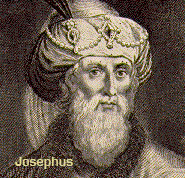
Flavius Josephus, a Jewish historian (A.D. 38-100), wrote about Jesus in his Jewish Antiquities. From Josephus, "we learn that Jesus was a wise man who did surprising feats, taught many, won over followers from among Jews and Greeks, was believed to be the Messiah, was accused by the Jewish leaders, was condemned to be crucified by Pilate, and was considered to be resurrected."10
Suetonius, Pliny the Younger, and Thallus also wrote about Christian worship and persecution that is consistent with New Testament accounts.
Even the Jewish Talmud, certainly not biased toward Jesus, concurs about the major events of his life. From the Talmud, "we learn that Jesus was conceived out of wedlock, gathered disciples, made blasphemous claims about himself, and worked miracles, but these miracles are attributed to sorcery and not to God."11
This is remarkable information considering that most ancient historians focused on political and military leaders, not on obscure rabbis from distant provinces of the Roman Empire. Yet ancient historians (Jews, Greeks and Romans) confirm the major events that are presented in the New Testament, even though they were not believers themselves.
Does it matter if Jesus really did and said what is in the Gospels?
 Yes. For faith to really be of any value, it must be based on facts, on reality. Here is why. If you were taking a flight to London, you would probably have faith that the jet is fueled and mechanically reliable, the pilot trained, and no terrorists on board. Your faith, however, is not what gets you to London. Your faith is useful in that it got you on the plane. But what actually gets you to London is the integrity of the plane, pilot, etc. You could rely on your positive experience of past flights. But your positive experience would not be enough to get that plane to London. What matters is the object of your faith -- is it reliable?
Is the New Testament an accurate, reliable presentation of Jesus? Yes. We can trust the New Testament because there is enormous factual support for it. This article touched on the following points: historians concur, archaeology concurs, the four Gospel biographies are in agreement, the preservation of document copies is remarkable, there is superior accuracy in the translations. All of this gives a solid foundation for believing that what we read today is what the original writers wrote and experienced in real life, in real places.
John, one of the writers sums it up well, "Now Jesus did many other signs in the presence of the disciples, which are not written in this book; but these are written so that you may believe that Jesus is the Christ, the Son of God, and that by believing you may have life in his name."12


Comments
Post a Comment